
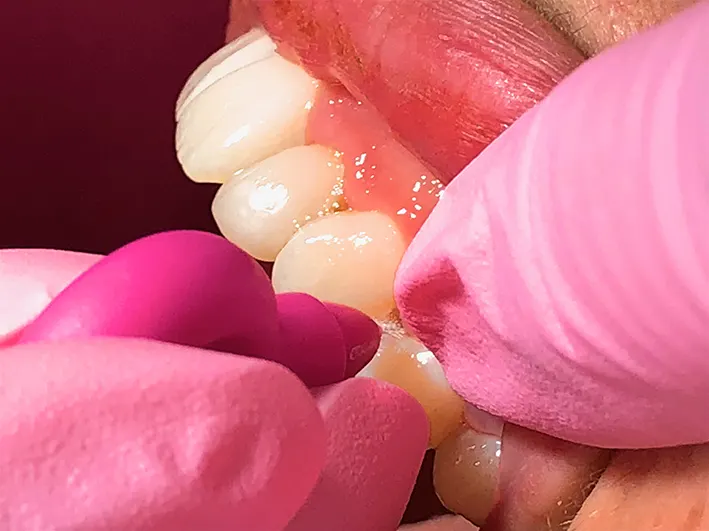
Healthy gums generally do not bleed when you brush or clean between your teeth. If you notice bleeding while brushing, flossing or using interdental brushes, it’s worth finding out why. A common cause is plaque buildup along the gumline or between the teeth. The bacteria in that plaque can irritate the gums and lead to inflammation.
Common causes
The most common cause is gingivitis, an inflammation of the gums. It can develop when plaque and deposits build up, when cleaning between the teeth is inconsistent, or when brushing techniques and oral care tools aren’t well suited to your needs. Hormonal changes, certain medications, dry mouth, smoking and some health conditions can also contribute.
It’s also important to distinguish gingivitis from periodontitis. With periodontitis, the inflammation affects not only the gums but also the bone and tissues that support the teeth. It can develop slowly and often causes few noticeable symptoms in its early stages. Symptoms such as deep gum pockets, persistent bleeding, receding gums, loose teeth or ongoing bad breath should be professionally evaluated.
Why it usually won’t go away on its own
Many people become cautious around a bleeding area and either clean it very lightly or avoid it altogether. That’s understandable–but it can allow the inflammation to continue. If plaque isn’t removed, the irritation usually remains as well. The goal is gentle but thorough cleaning using the right tools and techniques, without applying too much pressure.
During your appointment, I can help you find the brush size, interdental cleaning method and techniques that work best for your specific needs. Small adjustments often have a bigger impact than completely changing your routine.
When to have it checked
Consider having your gums checked if:
- The bleeding happens regularly or affects several areas.
- You also notice bad breath, tenderness or gum sensitivity.
- Your gums appear to be receding or your teeth look longer than before.
- You have implants, crowns, bridges or a history of periodontitis.
- You’re unsure which oral care products or techniques are right for you.
Having your gums checked doesn’t automatically mean you’ll need extensive treatment. In many cases, the first steps involve removing plaque and deposits, reducing inflammation, and making small improvements to your home care routine to help keep the problem from returning.
Do your gums bleed regularly?
A professional assessment can help identify the cause. I’ll evaluate your gum health, review your home care routine, and clearly explain any recommended next steps.