
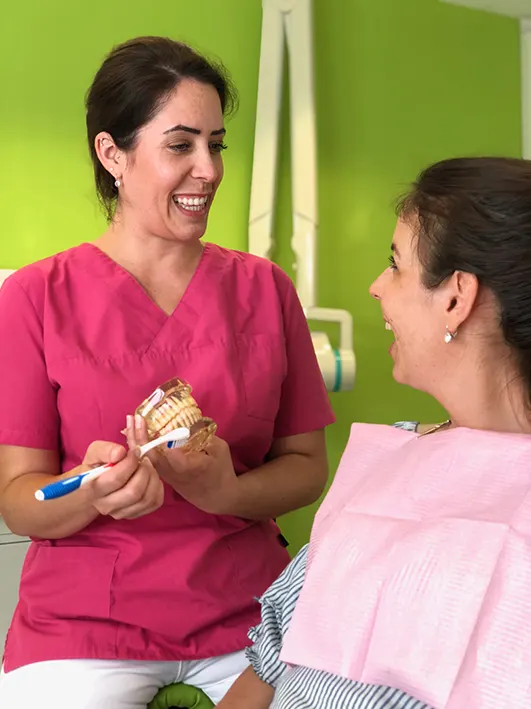
Even with good daily brushing and flossing, some areas are difficult to clean thoroughly. Plaque can build up between the teeth, along the gumline, behind the lower front teeth, and around crowns, bridges, and implants. Over time, this plaque can harden into tartar, which cannot be removed with a toothbrush alone.
What is checked during a dental hygiene appointment?
A thorough appointment begins with an assessment. It’s about much more than visible tartar. Your gum health, any bleeding, sensitive areas, stains, oral hygiene habits, and changes since your last visit are all taken into account. Depending on your individual situation, findings may be documented, home-care tools discussed, or further recommendations made.
The cleaning itself is tailored to your needs and carried out as gently as possible. Plaque, tartar, and surface stains are removed, tooth surfaces are polished, and fluoride or desensitising treatments may be applied when appropriate. If you have implants, crowns, bridges, or dentures, specialised instruments and personalised care recommendations are used.
Why there is no one-size-fits-all interval
You may have heard that dental hygiene should be done once or twice a year. While that can be a useful guideline, the ideal interval depends on your individual situation. Factors such as gum health, the risk of periodontitis, implants, medical conditions, dry mouth, smoking, home-care habits, and personal sensitivity can all influence how often professional care is beneficial.
Regular appointments make it easier to detect changes early. Mild inflammation can often be addressed before it develops into a larger problem. Home-care routines can be adjusted as your needs change, and you’ll gain a better understanding of which areas deserve extra attention between visits.
How you can support your oral health at home
- Brush thoroughly twice a day using gentle pressure.
- Clean between your teeth daily with floss, interdental brushes, or other suitable tools.
- If your gums bleed, don’t stop cleaning the area. Instead, have the cause assessed.
- Mention any sensitivity, bad breath, bleeding, or new stains during your appointment.
Professional dental hygiene does not replace daily oral care–it complements it. By removing hardened deposits, identifying risks early, and providing personalised guidance, it helps make your efforts at home more effective.
At DeHa, the promise is simple: cleanliness should not only be visible, it should be something you can feel.
Unsure what interval is right for you?
A personal appointment can help determine what best suits your oral health needs. Appointments can be booked online in just a few clicks.