
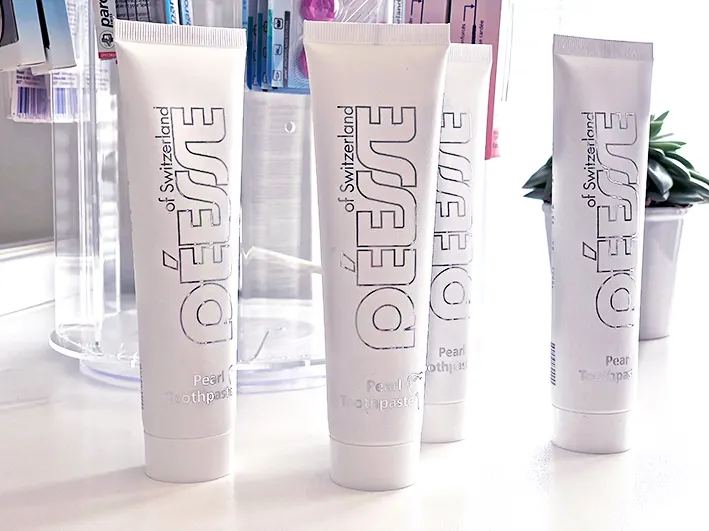
Coffee, tea, red wine, spices, tobacco and certain mouth rinses can all contribute to staining over time. These stains often remain on the surface of the teeth and can frequently be reduced with professional cleaning and polishing. As a result, teeth often look brighter and cleaner without altering their natural colour.
Cleaning, polishing or whitening: which is right for you?
Polishing removes surface stains and leaves the teeth feeling smooth and clean. Bleaching, on the other hand, changes the colour of the natural tooth structure itself. This distinction is important because fillings, crowns, bridges and ceramic restorations do not whiten in the same way as natural teeth. If you have visible restorations on your front teeth, it’s worth discussing this before starting any whitening treatment.
Before whitening, it’s a good idea to have your teeth and gums assessed. Gum health, tooth sensitivity, possible decay, worn fillings and significant discolouration should all be evaluated beforehand. This helps ensure that cosmetic treatment doesn’t aggravate an existing dental problem.
Home bleaching and in-office bleaching
Home whitening typically uses custom-made trays together with a whitening gel prescribed for your needs. The advantage is a gradual, controlled whitening process that can be carried out at home. In-office whitening is carried out professionally during an appointment at the practice. The best option depends on your current tooth shade, sensitivity level, desired result and lifestyle.
The most attractive whitening results are usually the ones that still look natural. Extremely white teeth aren’t necessarily more attractive. What matters most is that your teeth look healthy, your gums stay healthy, and the result suits your smile naturally.
What you can do yourself
- Try not to sip staining drinks throughout the day, as repeated exposure can increase staining.
- After acidic drinks, wait before brushing and avoid brushing aggressively.
- Use whitening toothpastes with caution, particularly if you have sensitive teeth.
- Consider a professional cleaning and consultation before beginning any whitening treatment.
Whitening is not a substitute for good oral health or regular dental hygiene care. It works best as a cosmetic enhancement when your teeth and gums are healthy and the expected results have been clearly discussed.
Interested in brighter teeth with a natural-looking result?
During a consultation, we can determine whether professional cleaning and polishing are enough, or whether whitening treatment may be a suitable next step.